
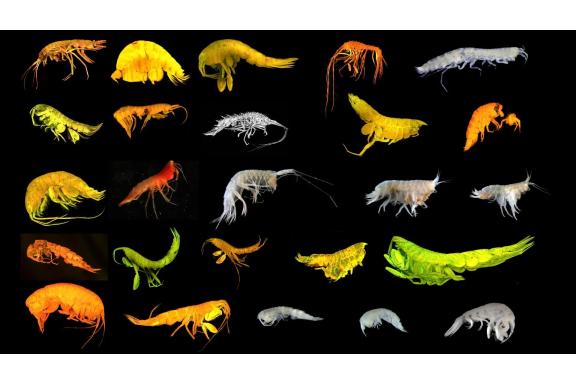
A team of 16 researchers has described 24 new species from the Clarion-Clipperton Zone, including an entirely new superfamily of crustaceans. The region sits at the centre of an escalating international dispute over deep-sea mining.
Four thousand metres below the surface of the central Pacific Ocean, in total darkness and near-freezing water, a group of small crustaceans has been living undisturbed for millions of years. Most are less than a centimetre long. Most have never been seen by a human being. Last week, 24 of them got names.
A new study published in ZooKeys describes 24 previously unknown species of amphipods from the Clarion-Clipperton Zone, a stretch of abyssal seafloor between Hawaii and Mexico spanning six million square kilometres.
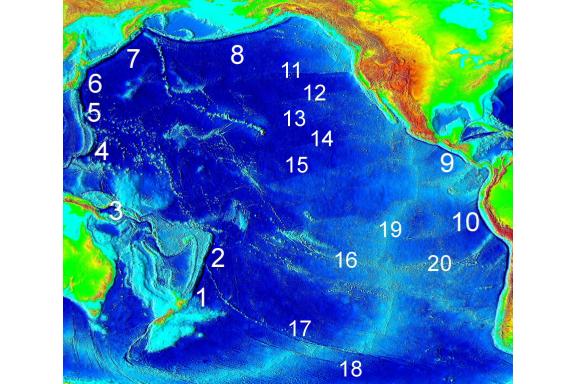
The haul includes a new family and, in a finding taxonomists call genuinely rare, an entirely new superfamily of crustaceans, a branch of the evolutionary tree that has never been documented before.
What a Superfamily Actually Means
Finding a new species is routine. Thousands are described every year. Finding a new genus is notable. Finding a new superfamily, one that represents a branch of the tree of life entirely absent from the scientific record, is something else.
“To find a new superfamily is incredibly exciting, and very rarely happens so this is a discovery we will all remember,” said Dr Tammy Horton of the UK’s National Oceanography Centre, who co-led the study, in a statement released through EurekAlert.
The new superfamily has been named Mirabestioidea, from the Latin for wonderful beast. One of its species, Mirabestia maisie, was named after Horton’s daughter. That act of naming matters beyond sentiment. Until an organism has a scientific name, it cannot officially be discussed, protected, or assessed in regulatory frameworks. “Until they are properly named for science in this official way, they are not communicable about,” Horton said in comments reported by Inside Climate News. “It absolutely gives them a passport to be discussed, to be talked about, to be conserved.”
How the Research Was Done
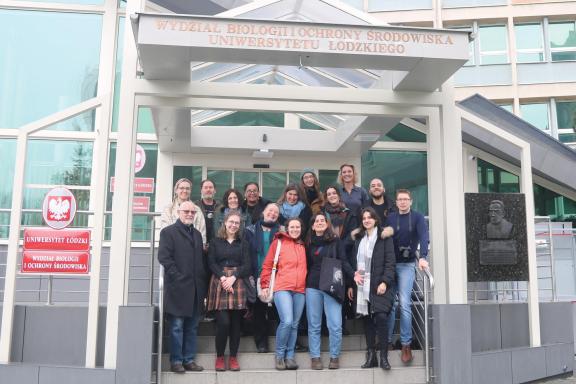
The study was led by Dr Anna Jażdżewska of the University of Lodz and Dr Horton of the National Oceanography Centre. Sixteen specialists gathered for a week-long taxonomy workshop in 2024 in Lodz, Poland, working intensively on CCZ samples.
The team described 24 new species across 10 amphipod families, identified two new genera, and established deepest-known records for several genera previously known only from shallower waters. Crucially, the team generated the first molecular barcodes, essentially DNA fingerprints, for a number of rare species, allowing future detection without physical collection.
The work forms part of the International Seabed Authority’s One Thousand Reasons project, which aims to formally describe 1,000 new species from the CCZ by decade’s end. At roughly 25 new amphipod species per year, researchers believe the group could be nearly fully catalogued within ten years. But more than 90 percent of all species in the CCZ remain unnamed.
The Nodules Beneath the Animals
The Clarion-Clipperton Zone is also one of the most commercially coveted stretches of seafloor on Earth. Scattered across the abyssal plain are trillions of polymetallic nodules containing manganese, nickel, cobalt, and copper, all critical to batteries, smartphones, and wind turbines. The ISA estimates the CCZ contains over 21 billion metric tons of them.
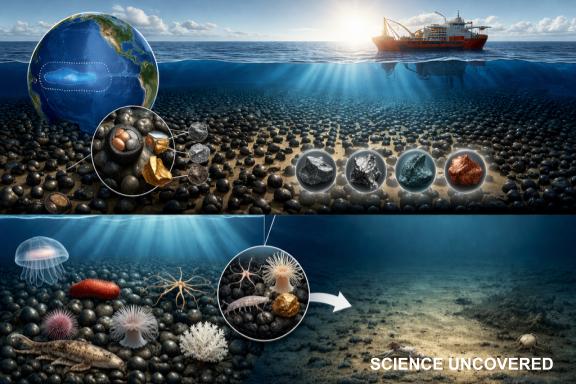
Up to a third of deep-sea life in the region depends on those nodules. The hard surfaces provide rare real estate in an otherwise soft sediment environment. Mining would remove the nodules and destroy the habitat. The proposed method involves a large seafloor vehicle that vacuums up nodules and sends them to a surface vessel through a vertical pipe, with displaced sediment and crushed organisms pumped back into the water column as a plume. A 1978 dredging test left visible seabed scars showing little to no ecological recovery after five decades.
The Funding Relationship Nobody Is Talking About
Here is the detail most coverage has missed. The vessel and samples used in this research were provided by The Metals Company, the Canadian mining firm that is currently the leading applicant for a commercial mining permit in the CCZ.
The Metals Company has applied to the United States government under an expedited permitting process fast-tracked by the Trump administration in January 2026 via NOAA. The International Seabed Authority, which governs the CCZ under international law, condemned the move. Legal scholars disagree on whether the United States, which is not a party to the UN Convention on the Law of the Sea, has the authority to grant mining permits in international waters at all.
Scientists funded by a mining company described a new branch of life in the area that company wants to mine. The research was conducted and published independently, and neither side appears to see a contradiction. But the tension is real.
Jażdżewska acknowledged the scale of what remains unknown. “We’ve just done 24 and that is a drop in the ocean, literally, of how many more we have to describe,” she said in comments reported by Inside Climate News.
At 25 new species per year, with more than 90 percent still unnamed, the cataloguing will not be finished before mining decisions are made.
Sources
The paper, “New deep-sea Amphipoda from the Clarion-Clipperton Zone: 24 new species described under the Sustainable Seabed Knowledge Initiative: One Thousand Reasons campaign,” was published 24 March 2026 in ZooKeys, Vol. 1274, by Anna M. Jażdżewska, Tammy Horton, and 14 co-authors. DOI: 10.3897/zookeys.1274.176711.
Quotes in this article are drawn from press releases issued by the National Oceanography Centre and Pensoft Publishers on 24 March 2026, and from reporting by Inside Climate News.
Jane holds a BSc in Biology from the University of Regina and a Master of Science in Bioscience, Technology and Public Policy from the Univesity of Winnipeg. Her reporting interests include Life Sciences, Physical Sciences and the Cosmos.